





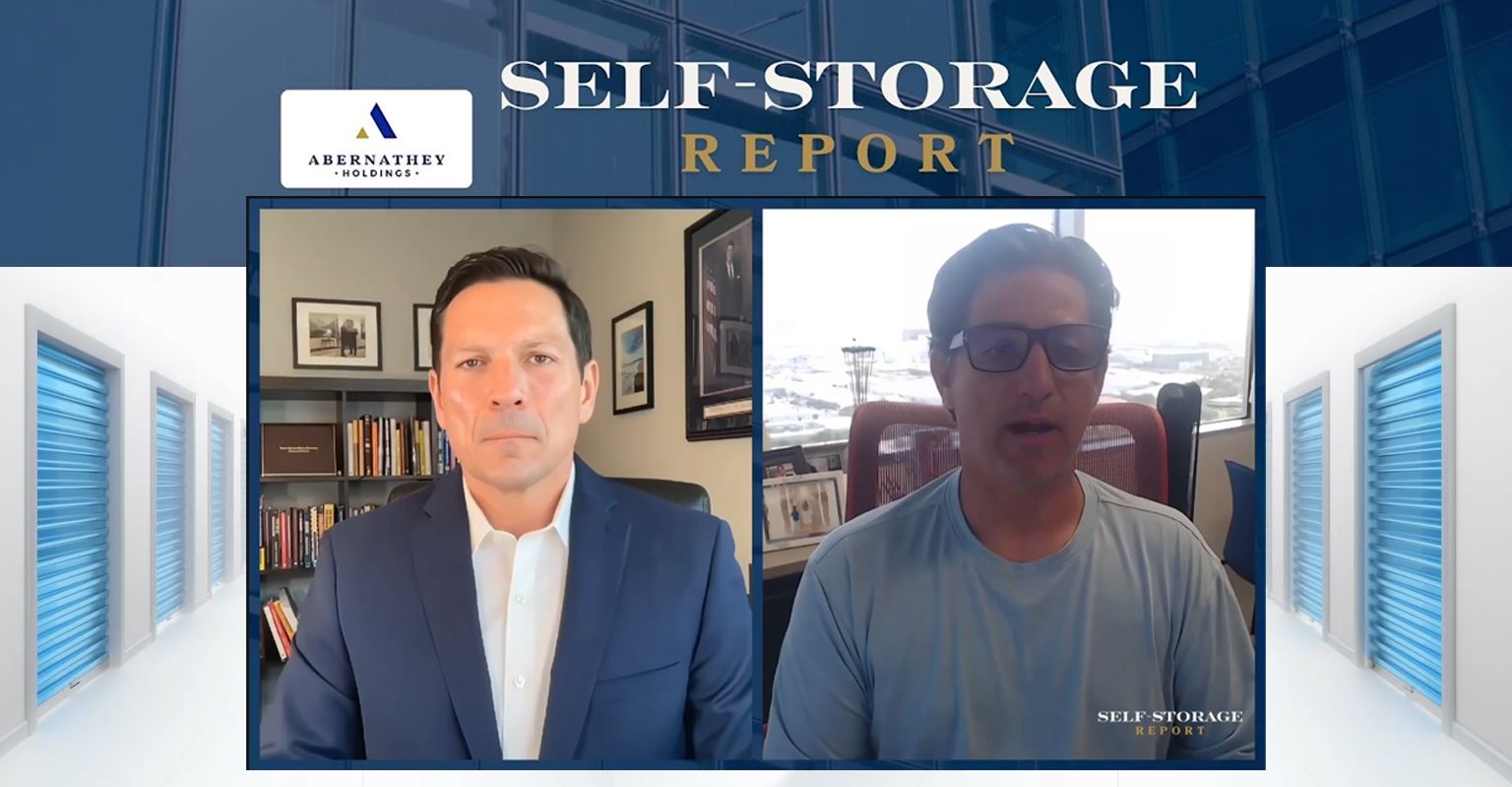
QuikStor owner Brett Henry has run facilities, navigated a difficult three-year demand cycle, and built a self-storage portfolio north of $1 billion. When Chris Berg of Abernathy Development asked him whether the best days of self-storage are behind us, Brett’s answer was straightforward: no. But he was equally clear that the era of operating quietly in the background is over.
What This Conversation Covers
- Why operators need to fund lobbyists and show up at state and local government
- How to frame self-storage as a community benefit, not a rent-gouging target
- Where the demand cycle is heading and when development makes sense again
- How AI is already changing call centers, financial reporting, and payment processing
- Why Brett bought QuikStor and what operator-built software actually means
01 — The Political Environment Is Shifting. Operators Need a Seat at the Table.
The New York lawsuit against Extra Space. Sacramento’s rent regulations. Increased media coverage. Self-storage has become part of a broader conversation about housing costs, and Brett thinks the industry needs to show up for that conversation with the right message and the right professionals.
That means hiring government relations consultants who know how to make a case in front of legislators. Brett credits the California Self Storage Association’s work with Platinum as a strong example. Their economic impact analysis, showing how rent caps lower asset values, reduce property tax revenue, and impact schools, gave Sacramento something concrete to engage with. That kind of argument lands. Operators speaking from pure operational logic, without professional support, often do not get the same traction.
“If you are not sitting at the table having those conversations, you are just accepting whatever decisions are made by people who do not understand your business.” — Brett Henry / Owner, QuikStor
His takeaway from the CSSA event in Napa was clear. Being present and organized matters. Operators who are not engaged in those conversations are essentially ceding the outcome to people who do not understand the business. Brett’s team learned this firsthand through a local entitlement fight in the City of Commerce, where getting actively involved in local elections was what ultimately brought the city back to the table.
He also made the case for changing how the industry frames itself publicly. Too much of the conversation has focused on pricing. The more effective approach leads with the benefits storage actually provides: month-to-month flexibility, no credit requirements, affordable space for small businesses getting started. Self-storage functions as an entrepreneurial incubator for a lot of operators. That story deserves to be told more consistently.
02 — The Demand Cycle Has Been Challenging. Signs Point Toward Recovery.
The last three years have been difficult across the industry, and Brett is candid about that. The COVID-era demand surge was historic. When it reversed, the shift was significant. High interest rates kept homeowners in place, consumer spending came under pressure, and supply that had been entitled and permitted during the boom years kept coming online into a softer market.
That said, Brett sees real indicators of a turn. He points to Public Storage’s acquisition of NSA for $10.5 billion as a meaningful signal. A deal of that scale reflects a view that conditions are improving, not deteriorating.
“Development has a long lead time. If you wait until the market is obvious, you have already missed it.” — Brett Henry / Owner, QuikStor
His own activity reflects that. After a quieter stretch on acquisitions, he has made more offers in the last six months than in the previous four years combined. Two land closes are in process for large buildings that will not open for another 28 to 30 months. He is focused on markets he knows well, underwriting at rates he can defend today.
His threshold is straightforward: if a market is not demonstrably at two dollars per foot on stabilized assets, the numbers are hard to make work. Construction costs are not coming down, and financing rates are not returning to their lows. Underwriting needs to reflect that reality.
03 — AI Is Already Part of Operations. The Challenge Is Knowing How Fast to Move.
Brett is not speculating about AI. His team is already using it, and he walked through specifics.
His call center had a backlog of voicemails coming in during off-hours and understaffed windows. AI now handles triage automatically, sorts them into categories, and routes them without manual review. A full AI payment system is rolling out this quarter, able to pull up tenant records, identify the right facility, review account balances, and process charges on file. PCI compliance for new card entry is still being worked through, but the core functionality is live.
Financial reporting has also improved. His team moved away from a legacy budgeting system and shifted to AI handling much of the analysis. Tasks that used to take hours now run in seconds.
“The biggest challenge is deciding how much to invest in AI today when AI tomorrow is going to be even better.” — Brett Henry / Owner, QuikStor
He is also clear that AI needs active management. Oversight, testing, and ongoing evaluation are part of the process. The productivity gains are real, but so is the need to deploy thoughtfully rather than just turning things on and stepping back.
04 — Why Brett Built QuikStor For Operators Like Him.
Brett’s decision to acquire QuikStor came from a specific concern. Private equity was moving into facility management software, and the underlying asset those companies were acquiring was operator data. Brett saw groups like Goldman Sachs entering the space and recognized that a PE-backed software platform with access to the operational data of thousands of facilities could influence development cycles, underwriting, and competitive positioning in ways that would not necessarily serve operators well.
Getting that data back into operator-controlled hands was the primary motivation. Beyond data, the existing tools had real gaps. Systems were slow. Reporting was built without operators in mind, presenting KPIs that did not connect to the questions facility owners were actually asking. Brett wanted software that started with the operator’s workflow and built outward from there.
QuikStor is owned by operators and month-to-month, with no long-term contracts needed. Product decisions are shaped by direct input from the operators using it. Brett also noted that competition in the software space is growing, and he thinks that benefits everyone. More options push all the vendors to keep improving.
Fast, reliable, and owned by veteran operators. Book a demo today and see if QMS is the right fit for your operation.